
Why Do Solar Prices Vary So Much in Brisbane? (2026 Guide)
One quote says $3,990 for 6.6kW, the next says $8,500. Same size, same rebate, same suburb — so what's actually different? Here's the honest 2026 Brisbane breakdown of why solar prices vary, what cheap quotes leave out, and the fair price band you should be paying.
6 min
—
10 FAQs
17 June 2026
You ring three solar companies in Brisbane, ask for a 6.6kW system, and the quotes come back at $3,990, $6,500 and $9,200. Same rebate, same suburb, same roof. So what's going on?
We get this question every week. The honest answer: not all solar is equal. System size on the spec sheet is the one thing that's actually the same — everything else (panel brand, inverter, racking, installer skill, warranty, after-sales support) sits underneath the headline number and quietly decides whether your system makes you money for 25 years or becomes landfill in five.
Here's what's really driving the gap between cheap and fair-priced solar in Brisbane in 2026.
The Brisbane 2026 Price Reality
According to the Solar Choice Price Index (June 2026) and SolarQuotes' running install data, here's where Brisbane sits after the federal STC rebate:
| System Size | Budget / Phone-Sale Range | Fair Quality Range | Premium Range |
|---|---|---|---|
| 6.6kW | $3,500 – $4,800 | $5,500 – $7,500 | $8,000 – $11,000 |
| 10kW | $6,000 – $7,800 | $8,500 – $11,000 | $12,000 – $16,000 |
| 13.2kW | $7,500 – $9,500 | $10,500 – $13,500 | $15,000 – $19,000 |
That's a 2–3x spread on the same kW number. The price doesn't vary because someone's being ripped off — it varies because what's inside the quote is fundamentally different.
The 7 Real Reasons Solar Prices Vary
1. Panel brand and where the silicon actually comes from
This is the biggest single driver. A 440W Seraphim or Risen panel wholesales for around $80. A 440W Aiko Neostar or Jinko Tiger Neo sits at $130–$150. A 440W SunPower Maxeon or REC Alpha Pure is $220–$300+. That's a $1,500–$5,000 difference per system before anyone has touched a roof.
And no — Tier 1 doesn't mean what people think it means. Tier 1 is a Bloomberg financial bankability rating of the manufacturer's parent company, not a quality rating of the panel itself. A Tier 1 panel can still degrade fast, fail in heat, or have a warranty that's worthless because the local entity is a $2 shell company. Always check who honours the warranty in Australia, not who built the factory in China.
2. The inverter (and whether it's actually compatible with Energex)
A no-name string inverter costs the installer $600. A Sungrow SG10RT or Fronius Primo 10.0 sits at $1,800–$2,400. A Tesla, SolarEdge HD-Wave or full Enphase microinverter setup pushes well past $3,500.
In South-East Queensland this matters more than most people realise: Energex enforces strict dynamic export limits and inverter compliance rules. Cheap inverters often need to be export-limited to 1.5kW per phase, which silently kills your feed-in income on sunny days. A compliant, properly commissioned inverter unlocks the full 5kW per phase. Same panels, very different bill.
3. The installer (CEC accreditation isn't the whole story)
Every legal install in Australia must be signed off by a CEC-accredited installer — that's the floor, not the ceiling. The real variable is whether the person on your roof is the accredited installer, or a subcontracted apprentice working under a borrowed licence number. The latter is rampant in $0-deposit phone-sale crews.
A good installer in Brisbane charges $1,500–$2,500 in labour for a standard install. A backpacker crew burning through 4 jobs a day charges $400. You can see why the quotes look different — and why one of those systems is more likely to leak, arc, or fail an Energex inspection.
4. Racking, isolators and Brisbane-specific gear
SEQ is a coastal, cyclone-adjacent, tropical environment. Quality systems use marine-grade aluminium racking (Clenergy, Schletter, Sunlock) with stainless fasteners — roughly $400–$600 more than the unbranded racking that turns chalky in two summers. Tile roofs need proper tile-replacement feet ($200–$400 extra over tin). Double-storey, steep-pitch or charcoal Colorbond all add legitimate cost.
5. Warranties (the gap nobody reads)
Here's where the cheap-vs-fair gap becomes obvious on paper:
| Warranty Type | Budget System | Quality System |
|---|---|---|
| Product (panels) | 10–12 years | 25–30 years |
| Performance (panels) | 25 yr @ 80% | 25–30 yr @ 87–92% |
| Inverter | 5 years | 10–12 years |
| Workmanship | 1–5 years | 10–25 years |
| Honoured by | Offshore entity | Local AU office |
We've seen retail contracts with a 1-year workmanship warranty buried in 6-point fine print. If a connector fails in year 4, you pay for the truck, the labour and the part. That's how $3,990 quietly becomes $5,800.
6. Guarantees vs warranties (they're not the same thing)
A warranty covers a part failing. A power-savings guarantee covers the system actually delivering the bill reduction you were sold. Almost nobody offers one because it puts onus on the install to be designed right — string layout, shading, orientation, tariff modelling, real usage data. If your quote promises "up to 80% off your bill" with no number in writing, that's marketing, not a guarantee.
7. Monitoring and after-sales support
The free inverter app most companies point at shows production — not whether you're saving. Independent third-party monitoring (Solar Analytics, Carbon TRACK) detects underperformance in real-time and alerts the installer to fix it before you ever see a bad bill. It costs about $300–$500 to add. Most cheap quotes skip it because they don't want to know.
Why $3,990 6.6kW Quotes Can Legally Exist
The maths isn't a mystery. In Zone 3 (Brisbane) a 6.6kW system generates roughly 99 STCs in 2026. At the current STC clearing price of about $36, that's ~$3,560 of rebate assigned to the installer. So the customer-facing $3,990 quote really means the installer is doing the entire job — panels, inverter, racking, labour, paperwork, GST — for about $430 of actual cash.
You don't need to be an accountant to work out what gets cut. Usually all of the following:
- Cheapest available panels and inverter (often discontinued stock)
- Subcontracted install crew paid per-job, not per-hour
- No site visit before quoting — Google Maps and a phone call
- Export limiting set conservatively to avoid Energex callbacks
- No monitoring, no commissioning report, no handover
- Warranty handled by a 1300 number that stops answering after year 2
The Phone-Sale Red Flags
Tell-tale signs the quote is heading for solar-orphan territory:
- Sold over the phone with no physical site visit
- $0 deposit, "sign today or the rebate ends" pressure (the federal STC rebate is legislated until 2030)
- No written breakdown of panel model, inverter model, racking brand
- No bill analysis before recommending a system size
- Refusal to put the power-savings number in writing
- Contract uses words like "may" and "up to" instead of dollar figures
- Buy-now-pay-later or zero-interest finance that quietly adds 15–25% to the system price
The Honest Brisbane Benchmark
For a 6.6kW system in Brisbane in 2026, you should expect to pay $5,500–$7,500 fully installed after rebate for a quality build using Tier 1 panels backed locally, a Sungrow or Fronius inverter, marine-grade racking, full commissioning, monitoring, and a 10–25 year workmanship warranty. Anything materially below that, ask hard questions. Anything materially above, ask what extras you're paying for.
Solar is one of the few purchases where the cheapest option almost always costs you the most over 10 years — through lost generation, premature failure, and replacement bills.
Related Reading
- How much does one solar panel cost in Australia?
- How much do solar batteries cost in Australia?
- Long-term solar savings: 25-year Brisbane model
- How smart is your solar system?
- Why we provide a power-savings guarantee
Want a fixed-price quote with a written power-savings guarantee and a proper site visit? Book a Solar Star and we'll walk through your last 12 months of bills before recommending anything.
Get a free, no-obligation solar quote for your home or business.
CEC-accredited installers · Tier-1 panels · Australia's first written power-bill savings guarantee.
Keep reading
More from the Knowledge Centre
Solar Saturdays: Here's to you SEQ
South East Queensland is known as a vibrant region with stunning coastlines, lush landscapes, and abundant sunshine, it's a true haven for solar energy! With its warm and sunny climate, South East…
Read article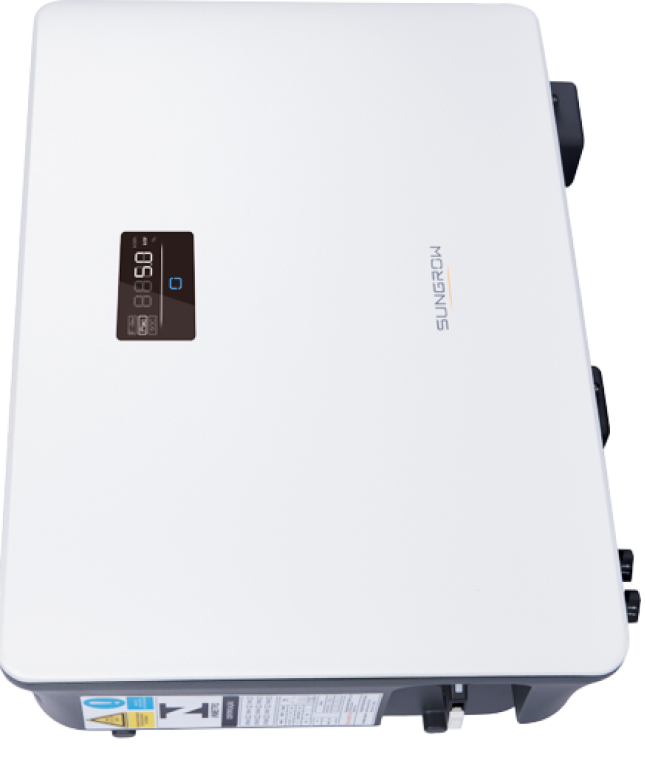
Solar Saturdays: The Solar You Don't See
So you've had your solar installed, now what? Do you get on a ladder and check just how those shiny new panels look on your roof? (it happens more often than you'd think!) or maybe you're someone who…
Read articleHow Smart is Your Solar System?
Many solar investors in Australia have absolutely no idea if their rooftop solar is doing what it should be in terms of savings simply because they do not have useful solar monitoring. For most, they…
Read article