
"Tier 1" Solar Panels in Australia: What It Actually Means in 2026
Tier 1 is a Bloomberg finance rating of a manufacturer's bankability - not panel quality. In Australia 2026 the rating that actually matters is the CEC Approved Products list. Here is the honest buyer guide, including your ACCC rights against door-knockers.
11 min
—
17 June 2026
Short answer: "Tier 1" is a BloombergNEF rating of a solar manufacturer's financial bankability for utility-scale projects - it is not a quality, performance, or warranty rating. In Australia in 2026, the list that actually protects you is the Clean Energy Council (CEC) Approved Products list, because no panel can claim the federal STC rebate or the Cheaper Home Batteries Program without being on it. If a salesperson at your door uses "Tier 1" as the proof point, you are being sold to - not informed.
This article was first written in 2020. We have rewritten it for 2026 because the same "Tier 1, sign tonight, no money down" pitch is still working on Australian households - and the ACCC has now flagged unsolicited rooftop solar sales as its first ever super-complaint issue (April 2025). Here is what Tier 1 actually means, what really matters in 2026, and the 12 checks that separate a system you will still love in 25 years from one you will be ripping off the roof in 5.
What "Tier 1" actually is (and is not)
The Tier 1 list is published quarterly by BloombergNEF (BNEF). The most recent updates were Q1 and Q2 2026. To qualify, a manufacturer has to show that six different non-development bank lenders or large project investors have financed unsubsidised, utility-scale projects (above 1.5 MW) using its modules in the past two years.
Read that again. Tier 1 is a measure of:
- Whether banks will lend against the manufacturer's modules at solar-farm scale.
- The manufacturer's balance sheet, factory scale, and shipment volume.
- The likelihood the parent company will still exist in 5-10 years to honour warranties.
Tier 1 explicitly does not measure:
- Panel efficiency, degradation, or real-world performance.
- Build quality, cell type, backsheet durability, or junction-box reliability.
- How the modules perform in 40 C Brisbane summers or after a Sunshine Coast hailstorm.
- Whether the warranty is actually enforceable in Australia.
BNEF itself states in the front page of every Tier 1 methodology document that the list is not a measure of technical quality. It is a bankability index for project financiers. Roughly 60-70% of all c-Si modules sold globally come from a Tier 1 manufacturer in any given quarter, so saying "our panels are Tier 1" is closer to saying "our panels come from a real factory" than it is to saying "our panels are premium."
The Australian rating that actually matters: the CEC Approved Products list
In Australia, the rating with real legal teeth is the Clean Energy Council (CEC) Approved Products list. There are three separate lists - modules, inverters, and batteries. Why it matters:
- If a panel is not on the CEC modules list, your installer cannot claim Small-scale Technology Certificates (STCs) for the system. That is the federal solar rebate - roughly $2,200-$2,800 off a 6.6 kW Brisbane install in 2026 - gone.
- If a battery is not on the CEC battery list, it cannot be used in the federal Cheaper Home Batteries Program (the 30% federal battery rebate that started 1 July 2025), the WA Residential Battery Scheme, or the QLD Supercharged Solar for Renters program.
- To be listed, every product must demonstrate compliance with Australian Standards - currently the IEC 61215 / 61730 design and safety tests for modules, AS/NZS 4777 for inverters, and AS/NZS 5139 for battery installation.
- The CEC actively removes products when they fail standards re-testing or when the manufacturer cannot provide updated certification. A product on the BNEF Tier 1 list can be off the CEC list - and is therefore unusable in Australian residential solar.
Before you sign anything in 2026, ask the salesperson to write the exact model number of the panel, inverter, and battery on the quote, then look each one up at cleanenergycouncil.org.au → Products program. If any line item is not on the current list, do not sign.
How "Tier 1" gets weaponised by door-knockers
In April 2025, consumer advocacy group CHOICE filed the first super-complaint ever lodged with the ACCC, specifically targeting unsolicited rooftop solar sales - door-to-door and unsolicited phone pitches. The complaint detailed pressure tactics, misleading rebate claims, finance traps, and systems left disconnected from the grid for months. The ACCC accepted it.
The classic 2026 pitch still runs like this:
Every single line of that pitch trips one or more provisions of the Australian Consumer Law (ACL).
Your ACL rights against unsolicited solar sales (2026)
An "unsolicited consumer agreement" - which covers door-knock and most unsolicited phone solar pitches - gives you specific federal rights:
| Your right | What it means in practice |
|---|---|
| 10-business-day cooling-off period | You can cancel in writing for any reason - no penalty, full refund of any deposit. Starts the day after you receive the signed agreement. |
| No supply or payment during cooling-off | The seller cannot install, deliver, or take payment for goods over $500 during the cooling-off period. If they do, the contract is void. |
| Written agreement and notice | You must be given a copy of the agreement and a cooling-off notice on the spot. No notice = up to 6 months to cancel. |
| Permitted hours | Door-knockers cannot call before 9am or after 6pm weekdays, or after 5pm Saturdays, and not at all on Sundays or public holidays. |
| Right to leave | "Do not knock" stickers must be honoured, and you can ask the salesperson to leave at any time - they must. |
To cancel: email the company in writing within 10 business days, keep a copy, and CC info@accc.gov.au if they push back. Breaches of the unsolicited-agreement rules carry penalties of up to $50 million per breach for the company.
The 12 buyer checks that actually matter in 2026
Forget "Tier 1." Use this checklist instead. Every quality Australian installer will pass all 12 - and walk you through them without being asked.
- CEC Approved Retailer. The retailer (not just the installer) is a signatory to the CEC Approved Solar Retailer Code of Conduct. Verify at cleanenergycouncil.org.au.
- CEC-accredited installer doing the work. Get the installer's name and CEC accreditation number on the quote - not just "a CEC installer."
- Panel model on the current CEC modules list. Look up the exact model number, not the brand.
- Inverter model on the current CEC inverter list and rated to AS/NZS 4777.2:2020.
- Battery (if included) on the current CEC battery list - mandatory for the federal Cheaper Home Batteries rebate.
- Product warranty 12+ years on panels, 10+ years on inverter, 10+ years on battery - not just the "performance" warranty.
- Performance warranty 25+ years on panels, with a clear annual degradation cap (0.4-0.55% per year is the 2026 norm).
- Manufacturer has an Australian office or a contracted Australian warranty agent - so a warranty claim does not have to cross an ocean.
- Itemised written quote showing panel model, inverter model, battery model, mounting brand, cable runs, isolators, monitoring, and the gross price before any rebate.
- STC rebate shown as a separate line - not bundled into a vague "discount." The STC value is published daily.
- Deposit 10% or less and fully refundable during the 10-business-day cooling-off period. No exceptions.
- Monitoring is set up on day one (Enphase Enlighten, SolarEdge, Sungrow iSolarCloud, Fronius Solar.web, GoodWe SEMS, etc.) and you are given the login - not the installer's master account.
What a 2026 "quality" 6.6 kW + 10 kWh system looks like
To make the checklist concrete, here is the typical mid-premium spec a reputable Brisbane installer is putting on roofs in mid-2026, with prices after the federal STC rebate and the federal Cheaper Home Batteries 30% discount:
| Component | Typical spec | Why it matters |
|---|---|---|
| Panels (6.6 kW) | 16 × 440 W N-type TOPCon (Trina Vertex S+, Jinko Tiger Neo, Longi Hi-MO X6, REC Alpha Pure-RX, QCells Q.Tron) | N-type TOPCon now ~$0.04/W more than PERC and gives 0.3%/yr lower degradation - the panel itself is the small cost in 2026 |
| Inverter (5 kW) | Sungrow SH5.0RS, Fronius Primo GEN24, GoodWe ET, Sigenergy SigenStor | Hybrid-ready so the battery can be added or expanded later without a second inverter |
| Battery (10 kWh) | Tesla Powerwall 3, Sungrow SBR096, BYD Battery-Box Premium HVS, Sigenergy SigenStor | LFP chemistry, on the CEC battery list, eligible for the 30% federal rebate |
| Mounting | Clenergy, Sunlock, Radiant - tile or tin specific | Cyclone-rated where required; 25-year structural warranty |
| Indicative price installed | $11,500-$14,500 (after STC + battery rebate) | Anything substantially below this on a quality spec means a corner has been cut |
How to spot a "Tier 1, sign tonight" sales script in 60 seconds
- The salesperson cannot tell you the exact model number of the panel they are quoting - only the brand.
- The quote shows a single bundled "after rebate" price with no STC breakdown.
- The system size is suspiciously rounded to fit a finance product (always 6.6 kW + a battery, always on 7-year finance).
- The contract is on a tablet, signed with a finger, and you are not given the full T&Cs before signing.
- There is urgency: "rebate ending," "last system in your suburb," "this price only valid tonight."
- The deposit is described as "small" but is non-refundable, or the finance contract starts before the cooling-off period ends.
- The salesperson cannot name the CEC-accredited installer who will physically be on your roof.
- You cannot find the company's full trading name, ABN, or office address easily on Google.
If two or more of these apply, close the door politely, take any paperwork they have left, and treat the 10-day clock as already running from the moment they leave.
What changed since 2020 (and why this article needed a rewrite)
| Topic | 2020 reality | 2026 reality |
|---|---|---|
| Dominant cell tech | p-type PERC, 280-330 W panels | N-type TOPCon and HJT, 440-460 W residential panels |
| STC rebate value | ~$3,800 on a 6.6 kW system | ~$2,200-$2,800 on a 6.6 kW system (STC deeming period drops each year to phase-out in 2030) |
| Federal battery rebate | Did not exist | Cheaper Home Batteries Program - ~30% off installed battery cost (started 1 July 2025) |
| Tier 1 list publisher | BloombergNEF | BloombergNEF - methodology unchanged, criticism more mainstream |
| Mandatory standards for inverters | AS/NZS 4777.2:2015 | AS/NZS 4777.2:2020 (mandatory since Dec 2021) - older units cannot be sold |
| Consumer protection | ACL unsolicited-agreement rules (existed but rarely enforced) | Same rules + April 2025 ACCC super-complaint + state-level bans on door-knocking in VIC for solar |
FAQs
Are "Tier 1" panels actually better quality?
Not necessarily. Tier 1 only measures the manufacturer's bankability for utility-scale projects. A small premium brand making genuinely better panels can be Tier 2 simply because it does not sell enough utility-scale volume. And a large Tier 1 manufacturer can produce both a flagship N-type panel and a low-cost economy line - the "Tier 1" badge applies to both.
Is the BNEF Tier 1 list useless then?
It is useful as a "will this company still exist to honour my warranty?" proxy. Combined with an Australian office and a CEC listing, it is a reasonable starting filter. As a single proof of quality, it is meaningless.
Which panel brands are currently Tier 1 and well-supported in Australia (mid-2026)?
Trina Solar, Jinko Solar, LONGi, Canadian Solar, JA Solar, REC Group, QCells, Risen, Astronergy, Boviet, and SunPower / Maxeon are all on BNEF's Q2 2026 list and have an Australian office or warranty agent. This is a starting filter only - look up the specific model on the CEC list before signing.
What if a salesperson uses "Tier 1" without specifying a brand?
Treat it as a red flag. Ask for the exact panel model, manufacturer, country of manufacture, and a copy of the product datasheet. A quality installer can give you all four in 30 seconds.
How long is the cooling-off period for door-knock solar in Australia?
10 business days from the day after you receive the signed agreement. If the seller did not give you a written cooling-off notice on the spot, the period extends to 3 months. If the agreement was not in writing at all, it extends to 6 months.
Can I cancel a "$0 down" solar finance contract?
Yes - the same 10-business-day cooling-off applies to the goods supply agreement, and most finance contracts arranged at the same point of sale collapse with it. Cancel in writing to both the solar retailer and the finance provider on the same day. If the finance company resists, lodge a complaint with AFCA (Australian Financial Complaints Authority) within 21 days.
What is the real difference between a $7,000 and a $14,000 6.6 kW system in 2026?
Panel cell type (PERC vs N-type TOPCon), inverter quality (no-name vs Sungrow/Fronius/GoodWe/Sigenergy), mounting (basic vs cyclone-rated), cable run quality, isolator brand, monitoring, installer experience, and post-install service. A $7,000 system can technically be CEC-compliant on day one and still be the wrong choice over 25 years.
If a panel is on the CEC list, is it automatically safe?
It meets the minimum Australian standards. Safe does not mean optimal - a CEC-listed economy panel is still an economy panel. The CEC list is a floor, not a ceiling.
Why does the ACCC care about door-to-door solar specifically?
Three reasons: (1) the contracts are typically $8,000-$25,000, far above the threshold where unsolicited selling causes real consumer harm; (2) the goods often cannot be removed easily once installed; (3) the federal rebate ($billions/yr) is being used as a sales hook by operators who never deliver a working system. The April 2025 super-complaint specifically called out installations left disconnected from the grid for months.
Where do I report a dodgy solar sales pitch?
Report to the ACCC at accc.gov.au/contact-us/contact-the-accc, your state fair-trading body (Queensland: Office of Fair Trading), and the Clean Energy Council if the company claims to be a CEC Approved Retailer. Keep every email, contract, and text message - they are the evidence.
The bottom line
"Tier 1" was a useful banking shorthand that got hijacked by sales scripts. In 2026 it tells you almost nothing on its own. The signals that actually matter in Australia are: a CEC-listed panel, inverter and (if included) battery; a CEC Approved Retailer; a CEC-accredited installer named on the quote; a 25-year performance warranty backed by an Australian office; a fully refundable deposit; and a properly itemised quote you were given time to read. Add the 10-business-day cooling-off period and you have more protection than any "Tier 1" badge has ever offered.
Related reading:
Get a free, no-obligation solar quote for your home or business.
CEC-accredited installers · Tier-1 panels · Australia's first written power-bill savings guarantee.
Keep reading
More from the Knowledge Centre
Solar Saturdays: Here's to you SEQ
South East Queensland is known as a vibrant region with stunning coastlines, lush landscapes, and abundant sunshine, it's a true haven for solar energy! With its warm and sunny climate, South East…
Read article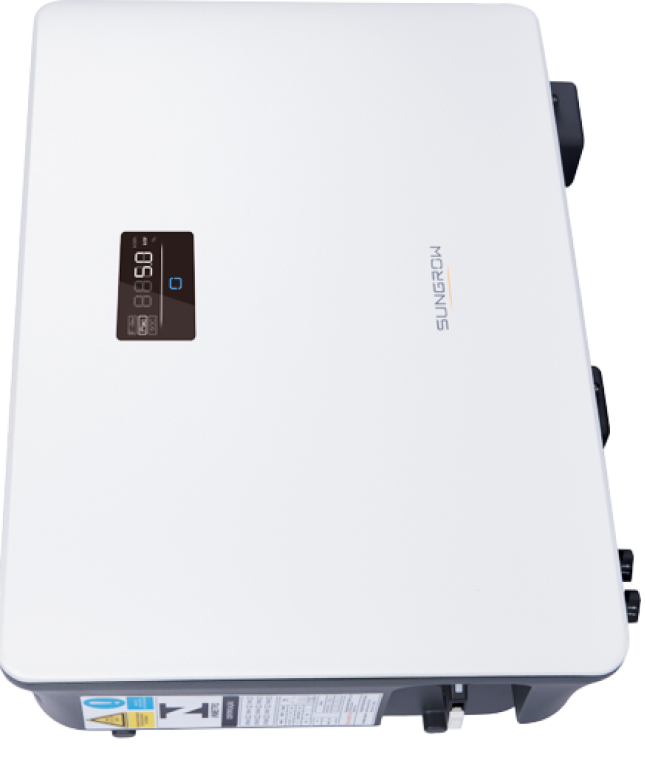
Solar Saturdays: The Solar You Don't See
So you've had your solar installed, now what? Do you get on a ladder and check just how those shiny new panels look on your roof? (it happens more often than you'd think!) or maybe you're someone who…
Read articleHow Smart is Your Solar System?
Many solar investors in Australia have absolutely no idea if their rooftop solar is doing what it should be in terms of savings simply because they do not have useful solar monitoring. For most, they…
Read article