
Solar for Brisbane Commercial Laundries
Cut your laundry's $145k–$1.4M power + gas bill by 55–75% with 100–800kW rooftop solar paired with heat-pump HWS, dryer exhaust heat-recovery, tunnel-washer drain heat-recovery and demand-charge battery management. 3–5 year payback after STCs, LGCs, IAWO and Qld Business Energy Saving rebates — TRSA Clean Green audit-ready, hospital + hotel customer Scope 3 compliant.
★ 4.9 / 16 laundry installs · Heat-recovery specialists · Healthcare + hospitality + workwear ready
Where commercial laundry energy actually goes
Gas dominates (typically 45–65% of total energy) — process steam for tunnel washers and ironers, plus dryer thermal load. Electricity covers washer/extractor pumps, ironer drives, folding lines and amenity. The full play is solar + heat-pump HWS + dryer exhaust + drain heat-recovery, which cuts BOTH electricity and gas bills together — typically a 55–75% combined energy reduction.
Tunnel washers, washer-extractors & batch processing
Continuous Batch Washers / tunnel washers (Kannegiesser PowerTrans, Jensen Universal, Milnor CBW, Pellerin Milnor — typically 35–110 kg per pocket, 6–18 pockets, 200–800 kg/hr throughput) and washer-extractors (Lavatec, Girbau, Milnor — typically 60–250 kg load) consume enormous water + electricity + thermal energy. A mid-size healthcare laundry processing 4 t/hr typically uses 35,000–55,000 L water and 280–420 kWh electricity per tonne of linen, with 60–85°C process water temperatures driving the thermal load. Variable-frequency drives on extractor motors, water reuse loops (5–8 stage tunnel water recycling) and counter-current rinsing all directly benefit from solar-fed pump load.
Ironers, calenders, finishing & folding
Flatwork ironers / calenders (Jensen JPS Compact, Kannegiesser EMR, Milnor Mentor — typically 1.2–3.5m chest width, 25–60 m/min, gas-heated 300–600 kW thermal OR steam-heated from central boiler) dry and iron flat linen continuously. Tunnel finishers / form finishers (Veit, Sankosha — for hospitality garments and uniforms), folding lines (Jensen Express, Lapauw — typically 12–28 kW electrical per line for drives and conveyors), automatic stackers and tracking equipment. Ironer thermal load is typically 30–45% of total facility energy on a flat-linen-heavy operation (healthcare, hospitality).
Dryers, conditioners & exhaust heat-recovery
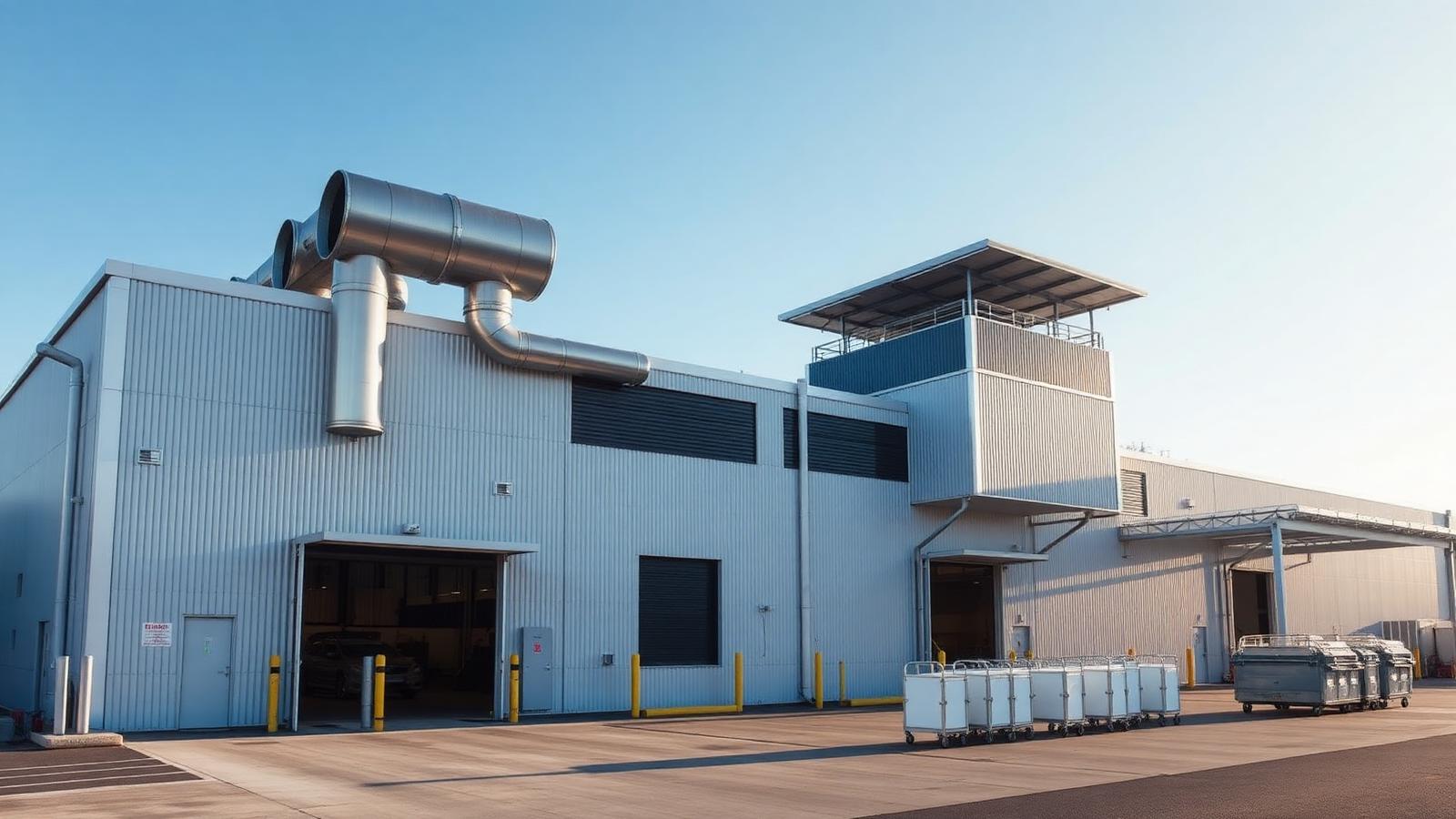
Industrial tumble dryers (Lavatec TT, Milnor T-series, Girbau ST — typically 100–250 kg load, gas-heated 200–450 kW thermal each, often 4–12 dryers per facility) for terry, garments and bulk drying, conditioners pre-ironing to optimise moisture for ironer performance, and dedicated exhaust ducting (visible from the road on every commercial laundry). Dryer exhaust heat-recovery (typically reclaiming 35–55% of exhaust thermal energy back to pre-heat process water or makeup air) is a top-three savings opportunity — and integrates naturally with heat-pump HWS at solar install time.
Boilers, hot water & process steam (the gas line)
Process steam from central gas-fired boilers (typically 1.5–8 MW thermal capacity, often Bosch / Cleaver Brooks / Fulton / Babcock Wanson — operating 80–110% load through production hours) feeds tunnel washers, ironers, dryers via distribution headers. Hot water for pre-soak, rinse and CIP cycles typically 60–82°C, supplied by dedicated boilers or boiler-fed plate heat exchangers. Gas is typically 45–65% of total facility energy spend on a steam-heavy operation. Heat-pump HWS retrofit (Reclaim Industrial, Sanden, Stiebel Eltron commercial — typically 3.5–4.8 COP at Brisbane ambient) combined with dryer exhaust + tunnel-washer drain heat-recovery typically displaces 55–80% of gas thermal load — a transformative saving.
Why Brisbane laundries are electrifying in 2026
Four reasons healthcare linen processors, hospitality laundries, workwear specialists and mega-laundry operators across South-East Queensland are signing solar + heat-recovery + heat-pump HWS contracts this year.
55–75% combined energy reduction
A typical mid-size Brisbane commercial laundry (healthcare or hospitality, 3–8 t/hr throughput) drops from $420k/yr to $135–175k/yr on a well-sized 300kW solar + 200kWh BESS + heat-pump HWS + dryer exhaust heat-recovery + tunnel-washer drain heat-recovery. Large healthcare linen processors (Spotless Laundries, Bolton Brady, Alsco, Quayclean, Country Wide Linen Hire) and hospitality processors (serving major hotel chains, resorts and convention centres) routinely save $300–800k/yr on 500–800kW installs. Workwear and PPE specialists (Alsco, Workwear Group, Lindstrom) benefit particularly from solar-aligned daytime production where shift patterns peak 6am–4pm.
Gas-to-electric thermal transition + carbon reduction
Commercial laundries are among the most gas-intensive sectors in Brisbane services — typically 45–65% of energy spend is natural gas for process steam and hot water. Origin Energy and AGL commercial gas tariffs have risen 35–55% since 2023 with continued escalation forecast through 2027. The full play is heat-pump HWS displacing the lower-temperature portion of hot water load (60–82°C), dryer exhaust heat-recovery, tunnel-washer drain heat-recovery, and progressive boiler downsizing as displaced load reduces required steam capacity. Combined with solar, total Scope 1+2 emissions reduction is typically 70–85% — directly bankable for TRSA Clean Green Certification renewal, Ecolab sustainability partnership, and healthcare/hospitality customer Scope 3 reporting.
TRSA Clean Green + Ecolab + healthcare/hotel customer compliance
TRSA (Textile Rental Services Association) Clean Green Certification, Ecolab / Diversey sustainability partnership programs, healthcare linen RABs accreditation (Linen Specification RAB-009), hospital procurement panels (HPV, HealthShare NSW, Health Support Queensland, NT Health), and hotel chain procurement (Accor Planet 21, Marriott Sustainability Hub, IHG Journey to Tomorrow, Hilton LightStay) all reward solar adoption, heat-recovery deployment and gas-displacement. Healthcare linen contracts increasingly require documented Scope 1+2 emissions reductions, and hotel chains require third-party sustainability certification for preferred linen supplier panels.
IAWO + STCs + LGCs + accelerated Div 40 + gas-displacement rebates
Laundry operating entities under $50M turnover deduct 100% of install cost in year of purchase under IAWO. STCs apply at purchase on systems up to 100kW (typically $25–45k off). LGCs are created annually on systems above 100kW (typically $11–32k/yr on a 300kW system). Heat-pump HWS qualifies for federal SMB battery + electrification incentives and Queensland Business Energy Saving rebates where eligible. Boiler replacement, heat-recovery infrastructure and BESS attract accelerated Div 40 depreciation. After-tax payback typically lands at 2.8–4.2 years on the combined package — among the shortest in any process-heavy sector.
Real example: healthcare linen processor (Brisbane industrial)
Real Brisbane industrial healthcare linen processor — 4.5 t/hr throughput across Kannegiesser PowerTrans tunnel washer + 6 washer-extractors, Jensen JPS Compact 3-roller ironer + 2 stack-fold lines, 8× Lavatec TT200 200kg gas dryers, central 4 MW gas-fired boiler. 300kW rooftop solar across production hall + ancillary roofs, 200kWh BESS for demand-charge management, Reclaim Industrial heat-pump HWS bank (3,800L), dryer exhaust heat-recovery to makeup air + HWS, tunnel-washer drain heat-recovery via plate heat exchanger.
Grid + 4 MW gas boiler, no heat-recovery
- Electricity: tunnel washer + extractor + pumps + WWTP$118,400/yr
- Electricity: ironer drives + folding + stacking + tracking$32,200/yr
- Electricity: lighting, HVAC, compressors, office$28,400/yr
- Gas: boiler — process steam + hot water (1,800 GJ/yr)$185,000/yr
- Gas: dryer thermal (8× 200kW dryers, 1,200 GJ/yr)$48,000/yr
- Sundry: chemicals, water, sundry energy$8,000/yr
- Total annual laundry bill (energy only)$420,000/yr
300kW solar + 200kWh BESS + heat-pump HWS + heat-recovery
- 300kW rooftop solar + 200kWh BESS—
- Heat-pump HWS bank + dryer exhaust + drain heat-recovery—
- Self-consumed solar + battery cycling475,000 kWh
- Reduced grid imports$148,200/yr
- Heat-pump HWS gas displacement (60–82°C HWS)$72,400/yr
- Dryer exhaust + drain heat-recovery gas savings$48,800/yr
- Solar export FiT + LGC sale-$14,200/yr
- Net annual laundry bill$136,400/yr
Laundry-sized packages
All proposals include site audit (electrical + gas + boiler + dryer exhaust + drain), Energex commercial application, IAWO + STC/LGC documentation, heat-pump HWS feasibility, heat-recovery design, TRSA / healthcare / hotel-chain documentation pack and 12-month performance guarantee.
100kW Boutique Laundry
- Suits laundromat or single-shift boutique linen processor
- Sungrow / Fronius 3-phase commercial inverter
- Full STC rebate at purchase
- Washer + dryer sub-metering
- Heat-pump HWS feasibility included
- Coin-operated / loyalty-card integration support
- 10-yr workmanship + 12-month performance guarantee
300kW + 200kWh + Heat-Recovery
- Suits healthcare or hospitality linen processor
- Heat-pump HWS bank (Reclaim Industrial / Sanden)
- Dryer exhaust heat-recovery to makeup air + HWS
- Tunnel-washer drain heat-recovery (plate HX)
- Federal SMB battery + electrification incentive
- TRSA Clean Green + Ecolab documentation pack
- Demand-charge management on tunnel washer + extractor starts
- 10-yr workmanship + 12-month performance guarantee
800kW+ Mega-Laundry / Multi-Site
- Suits mega-laundry (Spotless, Alsco, Bolton Brady scale)
- 500–1,200 kWh BESS for full demand-charge management
- Industrial heat-pump HWS + electric boiler hybrid
- Annual LGC creation + customer Scope 3 allocation
- Healthcare RAB-009 + hotel chain procurement docs
- Multi-site portfolio rollout coordination
- Capital / PPA / lease modelled side-by-side
Don't install laundry solar without heat-pump HWS + dryer heat-recovery
The single most common commercial laundry solar mistake is treating it as an electricity-bill play and ignoring the gas thermal load — which is typically 45–65% of total facility energy. Origin and AGL commercial gas tariffs have risen 35–55% since 2023 with continued escalation forecast through 2027, and hotel chain + hospital customer procurement panels increasingly require documented Scope 1+2 reductions. The full play is solar + heat-pump HWS displacing the 60–82°C portion of hot water, dryer exhaust heat-recovery to makeup air + HWS, and tunnel-washer drain heat-recovery via plate heat exchanger — combined gas displacement of 55–80% is routine on a well-designed retrofit. Insist your installer (1) audits gas load alongside electricity, (2) models heat-pump HWS + heat-recovery alongside solar, and (3) provides TRSA Clean Green + hospital/hotel-chain Scope 3 documentation. The combined picture typically halves apparent payback and wins customer contract renewals on the sustainability story.
Frequently asked questions
Healthcare linen processor, hospitality laundry, workwear specialist and mega-laundry operator questions, answered.
Cut the gas bill. Win the hospital tender. Shave the demand charges.
Free laundry feasibility within 7 business days — covers electricity, gas, boiler audit, dryer exhaust + drain heat-recovery, heat-pump HWS and TRSA / Ecolab / hospital + hotel-chain Scope 3 documentation. Brisbane-wide — Acacia Ridge, Geebung, Murarrie, Hemmant, Wacol, Eagle Farm, Brendale, Logan, Ipswich, Sunshine Coast and Gold Coast. Healthcare linen, hospitality, workwear, mat services and laundromats welcome.