
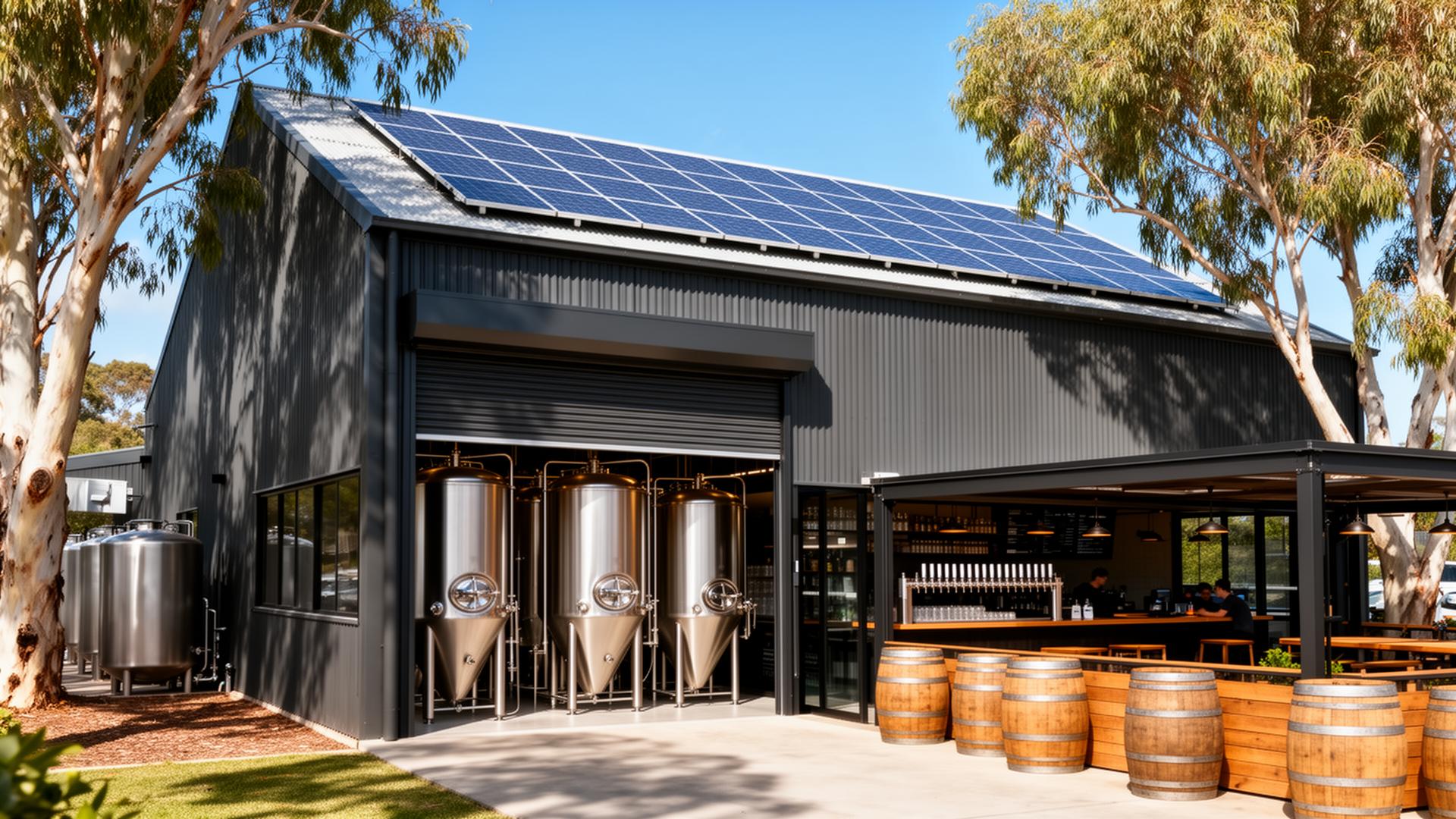
Solar for Brisbane Breweries, Distilleries & Cideries
Cut your brewery's $70k–$480k power bill by 55–70% with a 50–250kW rooftop solar (+ optional fermentation-protect battery). 3–4.5 year payback after STCs and IAWO — plus heat-pump brewhouse retrofits, B Corp / Indies Beer reporting and Scope 1+2 leadership.
★ 4.9 / 22 craft brewery installs · Heat-pump brewhouse specialists · B Corp / Indies Beer ready
Where brewery power bills actually go
Brewhouse heat, glycol cooling, packaging and taproom — heat-intensive and cooling-intensive at the same time, with strong daytime trading overlap. Breweries are one of the most natural fits for a combined solar + heat-pump retrofit play.
Brewhouse heat (mash, boil, CIP)
Mash tun heating, kettle boil, hot liquor tank and CIP wash cycles consume 60–70% of a brewery's total energy — traditionally gas-fired, but increasingly electric heat-pump or direct-electric. Heat pumps deliver 3:1 COP on hot liquor up to 85°C; resistance/induction handle boil temperatures. Replacing gas with solar-fired electric heat eliminates the largest single cost line on the brewery P&L.
Glycol chillers & fermentation cooling
Glycol chillers (20–80 kW) run almost continuously to maintain fermentation temperature in conical tanks, cold-crash dump, and bright tank storage. Cold room for kegs and packaged stock adds another 8–25 kW continuous. Cooling load is the second largest electrical line and runs 24/7 — solar covers the daytime portion, battery handles overnight, eliminating any reliance on grid for chilling.
Canning, bottling & kegging lines
Counter-pressure cannning lines (10–30 kW during run), bottling lines, keg washers and pasteurisers. Packaging is typically batched — a 4–6 hour packaging day twice a week — and almost always scheduled to daytime hours, making it perfectly solar-matched. Smart scheduling of packaging days to peak-solar weeks lifts self-consumption another 5–10%.
Taproom, kitchen & dispense systems
Taproom keg fridges, dispense glycol lines, ice machines, beer-line chillers, kitchen (if food service), POS, lighting, HVAC. Trading 12–14 hours a day means high overlap with solar generation, especially for venues with strong day-trade weekend brunch service. Taproom load is typically 20–35% of total brewery consumption.
Why Brisbane breweries are going solar in 2026
Four reasons head brewers, brewery owners and craft beverage CFOs across South-East Queensland are signing solar contracts this year — beyond simple bill savings.
55–70% brewery bill reduction
A typical Brisbane mid-size craft brewery + taproom drops from $165k/yr to $55–75k/yr on a well-sized 120kW solar + 60kWh BESS, with bigger savings if a heat-pump brewhouse retrofit is included. Larger production breweries (3,000+ HL/yr) routinely save $180–340k/yr on 250kW+ installs. The savings are essentially permanent — locked in for 25 years against rising grid + LPG prices.
Electrify the brewhouse — kill the gas bill
Gas/LPG-fired brewhouses are the single biggest decarbonisation lever in craft brewing. Converting to heat-pump-assisted hot liquor + induction kettle eliminates 60–80% of brewing-process emissions and 100% of the LPG bottle/network charges. Combined with solar, effective brewing heat cost drops from $0.04–0.08/MJ (gas) to $0.00–0.02/MJ (solar-fired electric). Payback on the electrification retrofit alone is typically 4–6 years; layered on solar it's 3–4 years.
B Corp, Indies Beer Australia & sustainability tendering
B Corp re-certification, Indies Beer Australia sustainability framework, and the major supermarket beer category sustainability scorecards (Coles, Endeavour, Dan Murphy's) all weight on-site renewable percentage and Scope 1+2 emissions. A 100kW+ solar install with heat-pump brewhouse moves most craft breweries into the leadership category — material for tap-list placement at sustainability-aligned venues (Merivale, Solotel, Australian Venue Co) and supermarket shelf gain.
IAWO + STCs + accelerated depreciation
Craft breweries under $50M turnover deduct 100% of install cost in year of purchase under IAWO. STCs apply on the first 100kW slice. Brewing equipment and battery storage attract accelerated Div 40 depreciation. Combined, after-tax payback typically lands at 3–4 years across most QLD craft breweries — and the cashflow uplift in year 1 is often the difference between approving a new fermenter or holding off.
Real example: Mid-size Brisbane craft brewery (2,400 HL/yr + 180-seat taproom)
Real mid-size Brisbane craft brewery — 2,400 HL/yr production, 25-tap taproom, in-house cannning line, light food service. 120kW rooftop solar, 60kWh BESS for fermentation protection, heat-pump Hot Liquor Tank retrofit eliminated LPG bottles.
Grid + LPG brewhouse, no on-site generation
- Brewhouse heat (LPG: mash, boil, HLT, CIP)$54,600/yr
- Glycol chillers, fermentation, cold room$38,400/yr
- Packaging line (canning, kegging, pasteurise)$22,800/yr
- Taproom (keg fridges, dispense, kitchen, POS)$28,200/yr
- HVAC, lighting, office, dispatch, demand$21,000/yr
- Total annual brewery bill (elec + LPG)$165,000/yr
120kW solar + 60kWh BESS + heat-pump HLT
- 120kW rooftop solar + 60kWh BESS + heat-pump HLT—
- Self-consumed solar + battery cycling186,000 kWh
- Reduced grid imports$58,200/yr
- LPG eliminated (heat-pump brewhouse)$42,400/yr
- Solar export FiT (capped)-$1,900/yr
- Net annual brewery bill$62,500/yr
Brewery-sized packages
All proposals include roof study, Energex embedded generation application, IAWO documentation, brewhouse electrification feasibility and 12-month performance guarantee. Capital, PPA and lease modelled side-by-side.
50kW Nano / Cidery
- Suits nano-breweries, small cideries, gin schools
- Sungrow / SMA commercial inverter
- Full STC rebate at purchase
- Glycol chiller sub-metering
- Taproom HVAC integration
- 10-yr workmanship warranty
120kW + 60kWh Standard Brewery
- Suits 1,500–4,000 HL/yr breweries + taproom
- Cold-room + glycol critical-load UPS
- Heat-pump HLT retrofit included
- Federal commercial battery incentive applied
- Packaging-day scheduling automation
- B Corp / Indies Beer reporting export
- Switchboard + protection upgrades
250kW+ Production / Distillery
- Suits 5,000+ HL/yr breweries, full distilleries
- 150–400 kWh BESS + demand-charge shaving
- Full brewhouse electrification design
- Energex embedded gen + LGC accreditation
- Multi-site portfolio pricing
- Capital / PPA / lease modelled side-by-side
Don't quote solar without modelling the heat-pump brewhouse option
The single most common brewery solar mistake is treating solar and brewhouse heat as separate decisions. Gas/LPG-fired brewhouses still account for 50–70% of energy spend at most QLD craft breweries — and solar on its own does nothing to address that. The economically correct sequence is (1) electrify the Hot Liquor Tank to heat-pump, (2) size solar to cover the new combined electric load (brewhouse + chillers + packaging + taproom), (3) add battery for fermentation resilience. Anyone quoting brewery solar without addressing brewhouse heat is selling you a 50% solution at 80% of the price. Insist on a combined energy plan.
Frequently asked questions
Head brewer, brewery owner, distillery operator and craft beverage CFO questions, answered.
Brew with sunshine. Kill the gas bottle.
Free brewery feasibility within 5 business days. Combined solar + heat-pump brewhouse + battery modelled. B Corp and Indies Beer reporting included. Brisbane-wide — Burleigh, Yatala, Wacol, Salisbury, Hemmant, Northgate, Sunshine Coast, Granite Belt.