
How Much Does a Solar Hot Water System Cost in Brisbane? (2025 Guide)
Fully installed solar hot water systems in Brisbane cost $2,800–$5,800 after the federal STC rebate in 2025. Here's the honest breakdown — heat pump vs thermal, real payback maths, and the mistakes we see homeowners make.
10 min
—
7 FAQs
17 June 2026
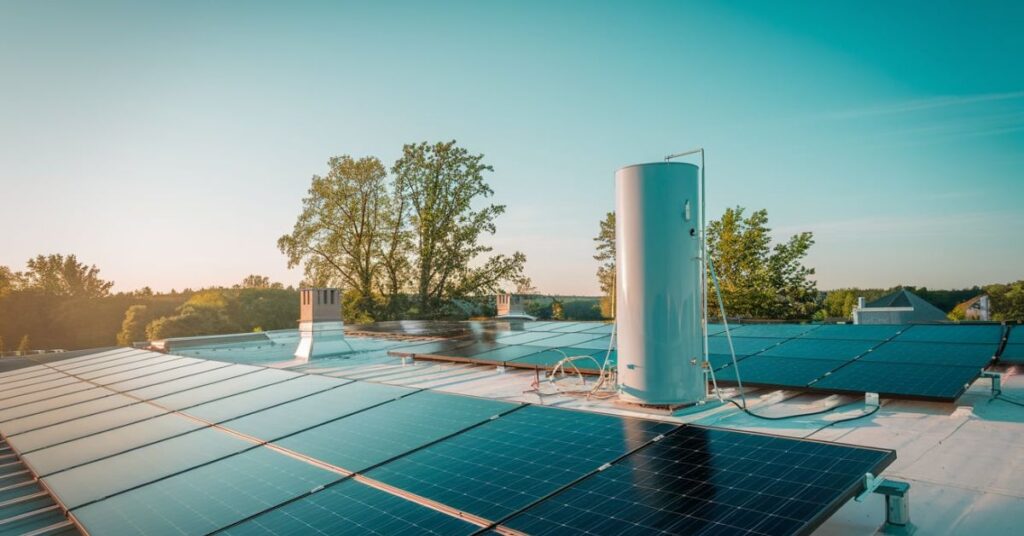
Across Brisbane and South-East Queensland in 2025, a fully installed solar hot water system lands between $2,800 and $5,800 after the federal STC discount. Heat pumps sit at the lower end, evacuated-tube thermal systems at the upper. Where your quote falls inside that range usually comes down to four things: tank size, collector type, roof access, and whether your installer bothers to claim every STC you're entitled to.
If you want the short version before we dig into the detail: for an average four-person home in SEQ, budget $3,500–$4,200 installed for a quality 270–315 L heat pump, or $4,800–$5,800 for a thermosiphon flat-plate system with electric boost. Below we'll walk you through what changes that number, the system we'd actually pick for your roof, and the payback maths that quote-sheets tend to skip.
Why we don't always recommend thermal solar in Brisbane (the honest take)
A decade ago, a rooftop thermosiphon was the obvious pick in SEQ — endless sun, warm mains water, five-year payback. The maths has shifted. With panel prices down roughly 80% and feed-in tariffs falling to 4–6 c/kWh across most Queensland retailers, the roof space a thermal collector takes up often earns you more by hosting two extra solar panels powering a heat pump downstairs.
We still install thermal systems regularly — done right, they run for 20+ years on essentially free sun — but we'll tell you straight which one suits your roof, your usage, and your existing PV array before we quote a cent.
The three options, ranked for South-East Queensland
1. Heat pump hot water systems — our default recommendation for most SEQ homes
A heat pump works on the same principle as a reverse-cycle air-con: it pulls heat out of ambient air and pushes it into a 270–315 L storage tank. In Brisbane's sub-tropical climate that's almost cheating — your unit is sipping warmth from 20–28 °C air for most of the year, which is why the better units hit a Coefficient of Performance (COP) of 4.5–5.0. Translation: every 1 kWh of electricity moves 4–5 kWh of heat into your tank.
- Installed price (Brisbane, 2025): $2,800–$4,500 after the federal STC discount
- Typical STC value in SEQ: $900–$1,300 off the sticker price (we'll explain below)
- Annual running cost: $90–$160 if you time it to your solar; $250–$400 on the grid
- Best for: Most homes — especially anyone planning to add or already running rooftop PV
- Watch-outs: Cheaper units can be as loud as an air-con compressor; pick the install spot away from a bedroom or your neighbour's window
Our pick for SEQ: Reclaim CO₂, iStore 270 L, or Sanden Eco Plus if budget allows. Each pairs nicely with a daytime timer that runs the unit between 10 am and 2 pm — soaking up the cheap (or free) solar window when your PV is exporting at 5 c/kWh anyway.
2. Flat-plate thermosiphon — the long-haul classic
The system most Australians picture when they hear "solar hot water" — two black panels and a horizontal tank, all bolted to the roof. Water heats inside the collector and rises into the tank by natural convection, so there's no pump to fail. Built-in electric or gas boost handles the cloudy weeks.
- Installed price: $4,200–$5,800 (electric boost) or $4,800–$6,400 (gas boost)
- Typical STC value in SEQ: $1,100–$1,600 off — solar thermal earns more STCs than heat pumps
- Annual running cost: $80–$180; the booster is the only meaningful draw
- Best for: North-facing tile or Colorbond roof with at least 4 m² of clear space, no plans to fill the roof with PV, and a structure that can carry a full tank (~350 kg loaded)
- Watch-outs: Heavy. A pre-2000 timber-truss roof in Logan or Ipswich may need an engineer's certificate before install
Our pick for SEQ: Solahart Streamline 302L or Rheem Loline 270L (split system — tank on the ground, panels on the roof — which is easier on older roofs and quicker to service).
3. Evacuated tube collectors — rarely the right call in Brisbane
Evacuated tubes are brilliant in cold climates because the vacuum-sealed glass tubes hold heat even when the air doesn't. In Hobart or the NSW tablelands they earn their premium. In Brisbane, you're paying $1,500–$2,500 extra for cold-weather performance the climate never really tests.
- Installed price: $5,500–$7,800
- Where it does make sense in SEQ: elevated Scenic Rim or Granite Belt properties (Stanthorpe, Boonah hills) where overnight temperatures regularly drop below 5 °C in winter
- Watch-outs: Glass tubes are fragile — one stray cricket ball and you're up for a $90–$140 tube replacement
Brisbane installed-price cheat sheet (2025)
| System type | Tank size | Price before STC | Typical STC discount (Zone 3) | You pay (installed) |
|---|---|---|---|---|
| Heat pump — entry | 270 L | $3,800–$4,400 | −$900–$1,100 | $2,800–$3,400 |
| Heat pump — premium (Sanden/Reclaim) | 270–315 L | $5,200–$5,800 | −$1,100–$1,300 | $4,000–$4,500 |
| Flat-plate thermosiphon, electric boost | 300 L | $5,400–$7,000 | −$1,200–$1,500 | $4,200–$5,500 |
| Flat-plate split, gas boost | 300 L | $6,200–$7,800 | −$1,300–$1,600 | $4,900–$6,200 |
| Evacuated tube | 300 L | $7,000–$9,200 | −$1,400–$1,700 | $5,600–$7,800 |
The five hundred-dollar quote gap between "entry" and "premium" heat pumps is real — and usually worth it. Premium CO₂-refrigerant units like Sanden are quieter, last 15+ years, and hold their COP in our few genuinely cold mornings. Entry-level R134a units do the job but often need a warranty claim by year seven.
What actually moves the price up or down on your quote
- Tank size. Two adults usually fit a 160–200 L heat pump. A family of four with teenagers wants 270 L minimum. Each 50 L step adds roughly $200–$350.
- Roof access. A single-storey Queenslander with clean tin? Easy day. A double-storey brick veneer in Bardon with terracotta tiles and a power line clipping the gutter? Add $300–$600 for safety rigging.
- Removing the old system. Disposing of a 25-year-old electric tank runs $150–$280, depending on whether it's been bolted to the slab or hung off a wall.
- Electrical rewiring. Switching from gas instantaneous to heat pump often means a new 20-amp circuit from your switchboard. $350–$700 depending on cable run.
- Booster choice. Gas boost is cheaper to run but requires an existing gas line. Electric boost adds nothing but plays beautifully with your solar.
- Tempering valve replacement. Required by Australian Standard AS3500. If yours is older than 5 years, expect $90–$140 added.
The STC rebate — what it actually pays you in Queensland
The federal Small-scale Renewable Energy Scheme awards Small-scale Technology Certificates (STCs) to anyone installing an eligible solar hot water or heat pump system. Brisbane and most of SEQ sit in STC Zone 3 — the second-highest band — which means you earn more certificates per system than someone in Sydney or Adelaide.
- Typical SEQ allocation: 26–40 STCs per system, depending on model and tank size
- Market price (Nov 2025): $35–$40 per STC
- Real discount on your invoice: $900–$1,600
Almost every reputable installer will assign the STCs to themselves and pass the value through as an upfront discount — it shouldn't be a separate line item you chase later. Ask to see your STC allocation in writing on the quote. If a quote doesn't itemise it, it's worth asking why; we've seen homeowners pay full retail because the installer kept the rebate quietly.
Source: Clean Energy Regulator — Small-scale Technology Certificates.
Payback maths — when does it actually pay for itself?
Here's the calculation we run for clients before recommending a system. It's not theoretical — it's the same back-of-envelope we'd do at your kitchen table.
Scenario A — Replacing an old electric storage tank
A typical 4-person Brisbane home with an electric storage system spends about $850–$1,100 a year heating water (at 30 c/kWh on a standard tariff). Move to a 270 L heat pump and that drops to roughly $200–$280 — and closer to $90 if you time the unit to your existing solar.
- Annual saving: $650–$900
- System cost after STCs: $3,500
- Payback: 4–5 years. System lifespan: 12–15 years. Net lifetime saving: $5,000–$8,000.
Scenario B — Replacing a gas instantaneous unit
Gas is genuinely efficient at heating water — about 80–85% — so the savings are slimmer. The case here is usually less about pure dollars and more about getting off the gas connection fee (currently $290–$330 a year just to keep the meter spinning in SEQ).
- Annual saving on usage: $200–$350
- Annual saving by disconnecting gas entirely: +$290–$330
- Payback: 6–8 years — longer, but you're future-proofed against gas price rises (which the AER forecasts at 4–7% annually through 2028)
Scenario C — You already have rooftop PV
This is where the maths gets fun. A heat pump set to run from 10 am–2 pm consumes about 2.5–3 kWh per day. If your panels are exporting at 5 c/kWh, you're effectively buying that energy from yourself at 5 c instead of selling it to the grid — a "self-consumption" saving of around 25 c/kWh, every day, for the next decade.
- Effective annual running cost: $45–$90
- Payback against grid-fed electric: 3–4 years
Running and maintenance costs — what to budget after install
Both heat pumps and thermal systems are low-maintenance, but neither is install-and-forget. Skip the schedule and the warranty becomes a paperwork problem.
- Anode rod replacement: every 5–7 years, $180–$280. Brisbane's mains water is moderately mineralised, so anodes here last a bit longer than coastal NSW.
- Tempering valve service: every 5 years, $90–$140.
- Pressure-relief valve test: every 6 months — DIY, takes 10 seconds (lift the lever, watch the water flow, release).
- Heat pump refrigerant check: every 5 years, $150–$220. Only refrigerant-charged systems (R134a, R744/CO₂) need this; an R290 unit is sealed for life.
- Solar collector clean: annually, $0 if you can safely reach the roof; $140–$220 if you book a pro.
- Full system service: $300–$450 every 5 years. Worth scheduling alongside any PV service to share the call-out fee.
Five mistakes we see Brisbane homeowners make
- Undersizing the tank to save $300. A 160 L tank for a family of four means cold showers by 7:30 am every winter weekend. The booster then runs hard and your bill barely drops.
- Installing the heat pump against a bedroom wall. Even the quietest units sit around 38 dB at one metre — fine outside the kitchen, less fine outside a sleeping toddler.
- Replacing like-for-like without checking solar fit. If you've added panels since 2018, a thermal solar collector now competes with your PV for the best north-facing roof space. Do the comparison.
- Choosing the lowest quote without checking STC allocation. A quote that's $400 cheaper but quietly pockets $600 of rebate is the more expensive quote.
- Forgetting the tempering valve. AS3500 makes it mandatory and Queensland Building Services will flag it on certification. Not the place to save $100.
Questions worth asking before you sign anything
- How many STCs is this system rated for in Zone 3, and is the discount itemised on my quote?
- Is the installer a CEC-accredited designer/installer, and is the plumber QBCC-licensed for solar/heat-pump hot water?
- What's the manufacturer warranty on the tank versus the compressor/collector — they're usually different.
- If a part fails in year six, who do I call — you, the manufacturer, or some 1300 number?
- For heat pumps: what's the published sound rating (dB at 1 m) and where will you mount it?
- If gas removal is part of the job, is decommissioning the meter included or is that an extra invoice from the gas retailer?
If you'd like us to run those questions against a quote you've already received, send it through — we'll mark it up for free and tell you what's missing. No pressure to switch installers; just an extra set of eyes from a team that's been wiring solar across Brisbane since 2012.
Frequently asked questions
Is a heat pump actually "solar"?
Not strictly — it runs on electricity, not direct sunlight. But pair it with rooftop PV and a daytime timer, and it's effectively solar-powered for 8–10 months of the SEQ year. The federal STC scheme treats both as equivalent renewable hot-water options.
Can I install a solar hot water system myself?
No. In Queensland the installation must be done by a QBCC-licensed plumber, and to claim the STC rebate the system must be installed by a CEC-accredited installer. DIY voids the warranty, the rebate, and your home insurance in one move.
How long does a solar hot water system last in Brisbane?
Heat pumps typically run 12–15 years; quality CO₂ units (Sanden, Reclaim) push 18–20. Flat-plate thermal systems often outlive the house at 20–25 years, though tanks usually need replacing once around year 12–15.
Do I need north-facing roof space?
For thermal systems, yes — north or near-north (within 45°) for solid winter performance. Heat pumps don't care which way your roof faces; they only need ground-level space and ventilation.
Does the Queensland state government offer a separate rebate?
Not currently for residential hot water (the previous QLD interest-free loan scheme closed in 2022). The federal STC discount is the main lever. We'll always check active programs at quote time — incentives shift quietly.
What size system does a 4-person SEQ home need?
270–315 L is the sweet spot. Go to 250 L only if showers are short and the laundry doesn't run hot. A 200 L heat pump is a 2-adult system, not a family system, regardless of what the sticker says.
Get a free, no-obligation solar quote for your home or business.
CEC-accredited installers · Tier-1 panels · Australia's first written power-bill savings guarantee.
Keep reading
More from the Knowledge Centre

How Much Does Solar Panel Cleaning Cost?
Solar panel cleaning cost typically $100 to $300, depending on the size of the system and the complexity of the job. For a comprehensive understanding of why regular cleaning is crucial and how it…
Read article
Solar Battery Cost in Brisbane 2026: Real Prices After Federal Rebate
What home batteries really cost in Brisbane after the 2025 Cheaper Home Batteries rebate — installed prices by brand, payback maths, sizing rules, and when a battery still doesn't pay back.
Read article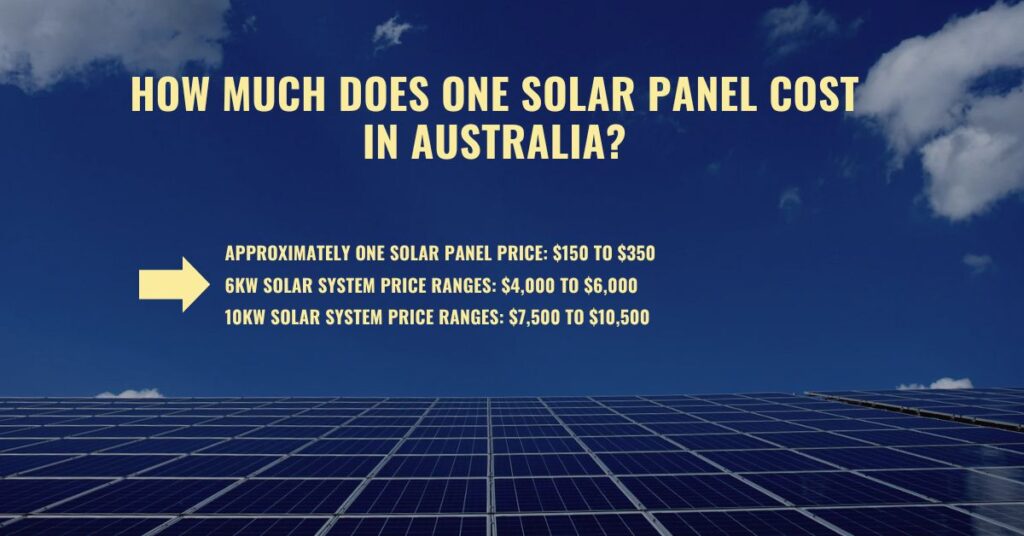
Solar Panel Cost in Brisbane 2026: Per-Panel & Full System Prices
What one solar panel really costs in Australia in 2026 — plus fully installed 6.6 kW, 10 kW and premium system prices for Brisbane, the STC rebate maths, and three pricing traps to avoid.
Read article